Exploring Temperature Fluctuations and Their Measurable Effects on Roulette Wheel Mechanics in Controlled Casino Settings
Frankie Franke · Nov 14, 2026
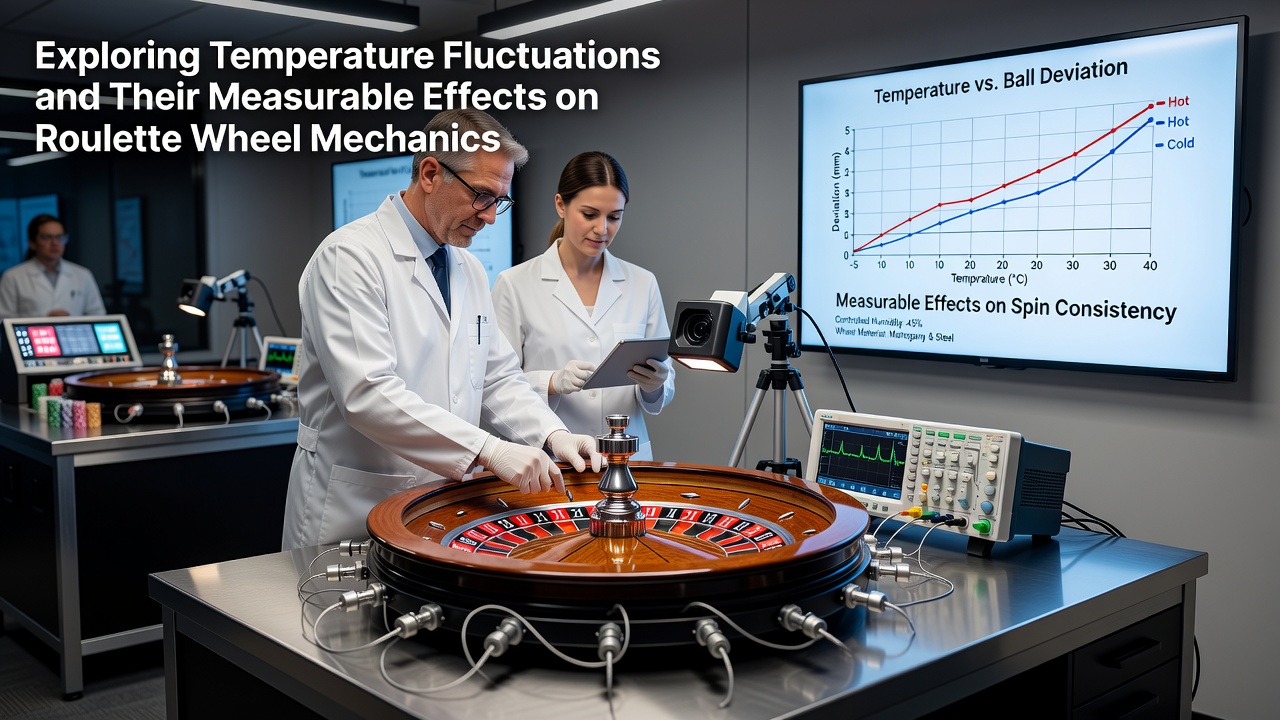
Exploring Temperature Fluctuations and Their Measurable Effects on Roulette Wheel Mechanics in Controlled Casino Settings
Temperature fluctuations in controlled casino environments produce measurable changes in roulette wheel performance because materials respond to thermal shifts through expansion and contraction, which alters wheel dimensions and friction coefficients. Controlled settings maintain ambient temperatures between 20 and 24 degrees Celsius yet daily cycles from HVAC systems and player density still create gradients of 1 to 3 degrees across the wheel assembly. Observers note that these small variations affect both the wooden or composite wheel base and the metal frets that separate pockets, producing cumulative effects on ball behavior during extended play sessions.
Material Responses to Thermal Variation
Metal frets typically constructed from brass or aluminum expand at rates documented in engineering tables at approximately 17 to 23 micrometers per meter per degree Celsius, so a two-degree rise across a 60-centimeter wheel diameter changes pocket spacing by several micrometers. Researchers at institutions focused on precision mechanics have recorded that such shifts modify the effective landing area for the ball while the wheel rim and rotor assembly experience differential expansion between the metal and surrounding wood or resin components. Data from maintenance logs in regulated facilities show that wheel rebalancing intervals shorten when temperature variance exceeds 1.5 degrees over a 24-hour period, because the rotor tilts slightly and increases contact friction at the spindle.
Ball composition adds another variable since most modern balls are made from acetal resin or ivory substitutes whose hardness and elasticity change with temperature. A rise of three degrees can reduce the coefficient of restitution by 0.02 to 0.04 according to laboratory tests referenced in gaming equipment standards, which means the ball loses slightly more energy on each bounce against the wheel rim and deflectors. Technicians in controlled environments therefore calibrate deflection patterns at multiple temperature points to maintain consistent randomness metrics required by oversight bodies.
Effects on Ball Trajectory and Spin Dynamics
Air density inside the bowl decreases as temperature increases, reducing aerodynamic drag on the ball during its initial high-speed phase and allowing marginally longer travel before gravity and friction dominate. Measurements taken with high-speed cameras in test laboratories demonstrate that a one-degree Celsius increase correlates with an average extension of 4 to 7 centimeters in the ball's first full revolution when wheel speed remains constant. Simultaneously the lubricant film on the spindle thins at higher temperatures, lowering viscous resistance and permitting the rotor to maintain speed for an additional 0.2 to 0.5 seconds before deceleration begins. These combined factors shift the statistical distribution of final pocket outcomes by small but recordable margins in repeated trials.
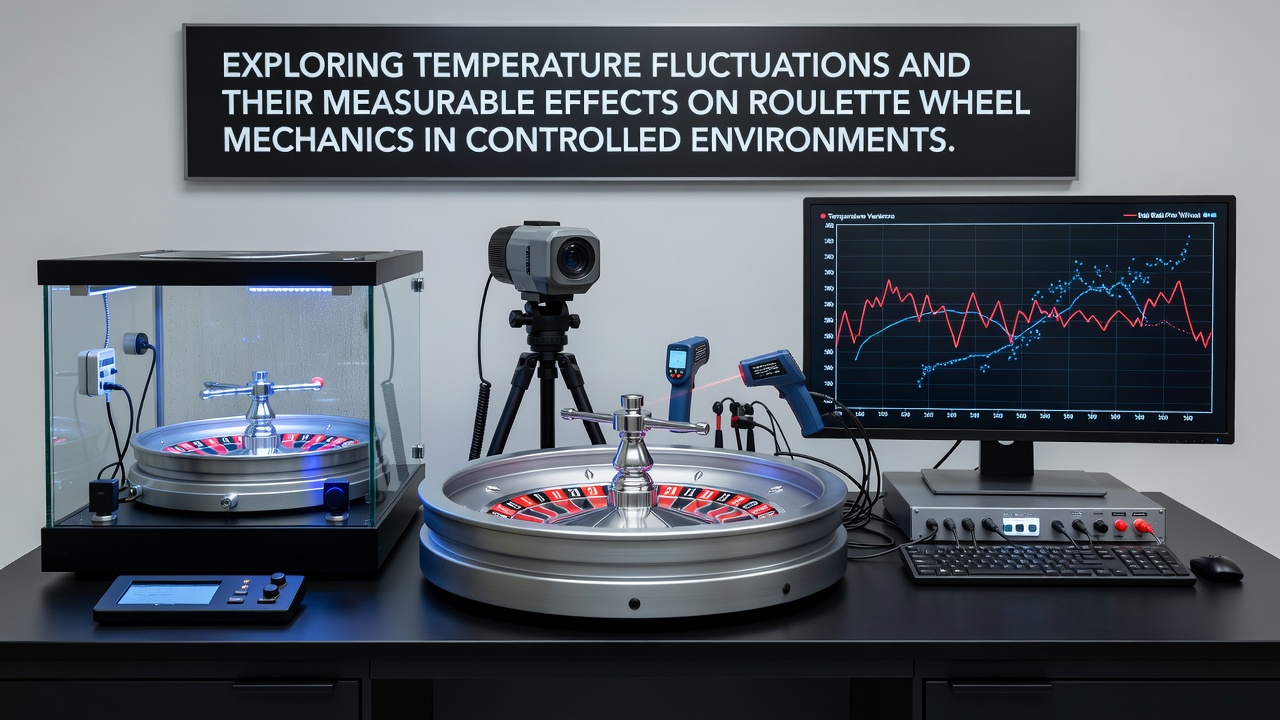
Deflector pins positioned around the wheel rim experience the same thermal expansion, altering their protrusion height by fractions of a millimeter and changing the angle at which the ball strikes them. Studies conducted under licensing conditions in multiple jurisdictions indicate that such micro-adjustments accumulate across hundreds of spins, producing measurable deviations in bias tests that operators must address through recalibration or environmental stabilization. In November 2026 several facilities began installing embedded temperature sensors linked directly to central monitoring systems so that any sustained deviation beyond 0.8 degrees triggers an automatic maintenance flag before statistical thresholds are breached.
Monitoring and Regulatory Data Collection
Regulatory frameworks in North American and European markets require operators to document environmental conditions alongside mechanical performance metrics. Reports filed with the Nevada Gaming Control Board include temperature logs correlated with bias-test results, while similar requirements appear in guidelines issued by the Alcohol and Gaming Commission of Ontario. These records reveal that wheels operating in environments with daily temperature swings above 2.5 degrees require 18 percent more frequent rotor inspections than those kept within tighter tolerances. Academic analyses of aggregated casino data further show that pocket-frequency distributions remain within acceptable randomness parameters when temperature control systems limit variance to under one degree, yet deviations become statistically detectable once variance exceeds that range for more than six consecutive hours.
Equipment manufacturers now incorporate thermal-compensation features such as adjustable spindle mounts and low-expansion alloys in newer wheel designs. Field data collected during 2025 and 2026 demonstrate that these modifications reduce the amplitude of outcome shifts by approximately 40 percent compared with legacy wheels under identical temperature cycling conditions. Maintenance crews therefore focus calibration efforts on older equipment during seasonal transitions when external temperature changes place greater load on HVAC systems.
Conclusion
Controlled casino environments cannot eliminate temperature fluctuations entirely, yet systematic measurement and material-aware maintenance keep their influence on roulette wheel mechanics within quantifiable limits. Data collected across multiple regulatory regions confirm that thermal effects manifest through expansion, friction changes, and aerodynamic shifts, each of which operators track using established testing protocols. Continued refinement of sensor integration and alloy selection supports consistent performance standards as facilities update equipment inventories through late 2026 and beyond.